
Treatments
Hidden Braces
All the precision of traditional braces. Worn on the inside of your teeth — completely invisible from every angle.
What They Are
Braces that no one can see
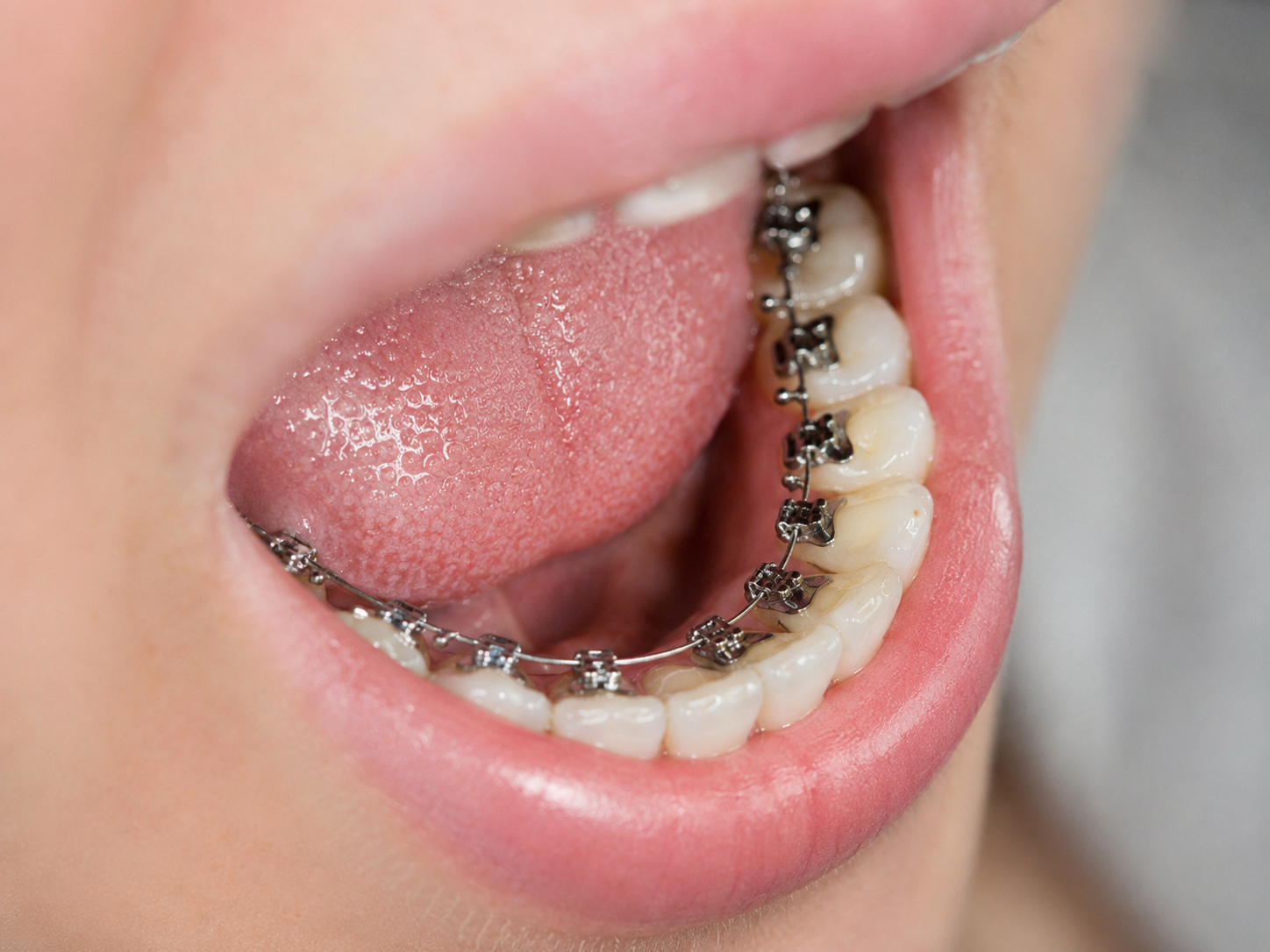
Hidden braces — also called lingual braces — use the same bracket-and-wire mechanics as traditional braces, but are placed on the inner (tongue-facing) surface of your teeth rather than the front. From the outside, your smile looks completely unaffected, even mid-treatment.
This makes them the most discreet fixed orthodontic option available. Unlike clear aligners, they're always working — no trays to remove, no wear schedule to maintain. Unlike traditional braces, no one will ever know they're there.
At Smile Suite, treatment planning goes beyond tooth movement — Dr. Kim considers your facial profile, your bite function, your airway, and your long-term stability as part of every assessment. Hidden braces require more technical skill to place than standard braces, which is why they're offered by a smaller number of providers. Dr. Kim has the training and experience to use this system effectively for the right candidates at our Evanston practice.
How They Compare
Hidden braces vs. your other options
vs. Clear Aligners
Both are discreet — but hidden braces are fixed, which means they work continuously without any action on your part. Aligners require 20–22 hours of daily wear and disciplined compliance. For complex cases, hidden braces often provide more precise control. For patients who want to remove their orthodontics entirely for certain situations, aligners offer that flexibility.
vs. Traditional Braces
Same mechanics, different position. Traditional braces are visible on the front of your teeth; hidden braces are on the inside. Treatment capability is comparable across most case types. The tradeoff is an adjustment period for tongue comfort and speech — which typically resolves within a few weeks.
Who This Is For
The right patient for hidden braces
Hidden braces are an excellent solution for adults who want effective orthodontic treatment without visible hardware. They're particularly well-suited to:
Professionals in high-visibility roles
Executives, attorneys, on-camera professionals, speakers — anyone for whom visible braces would feel out of place in their professional context.
Adults who want fixed treatment
Patients who want the efficacy and consistency of braces but don't want them visible. Hidden braces deliver both.
Patients with specific compliance concerns
For patients who know they won't maintain aligner wear consistently, a fixed system removes the compliance variable.
Cases requiring precise correction
Hidden braces can address complex bite and alignment issues that may be difficult to correct with aligners alone.
Hidden braces aren't the right solution for every case. During your consultation, Dr. Kim will assess whether your specific anatomy and treatment goals make you a good candidate — and she'll be direct with you if another approach would serve you better.
What to Expect
Your adjustment period, honestly described
Tongue adjustment
The inside placement means your tongue will be in contact with hardware it's not accustomed to. This typically causes temporary soreness and some speech changes — a slight lisp for most patients while the tongue adapts.
Speech normalizes
Most patients adapt fully within 3–4 weeks. The tongue is highly adaptive — and with practice, speech returns to normal for the vast majority of patients.
Appointments & adjustments
Adjustment appointments follow a similar cadence to traditional braces — every 6–8 weeks. The inside position makes these appointments require more technical access, which is factored into appointment time.
The Details
What you should know
Visibility
Zero visible hardware from the front. Even close up in conversation, no one will know you're in treatment.
Comfort adjustment
An initial adjustment period of 2–4 weeks is typical. Tongue soreness and minor speech changes resolve as you adapt.
Oral hygiene
Cleaning around lingual brackets requires the same care as traditional braces, with particular attention to the inner tooth surfaces.
Treatment length
Comparable to traditional braces — typically 18–24 months depending on case complexity.
Cost
Hidden braces are typically priced higher than standard braces due to the additional technical skill and chair time required for placement and adjustments.
Retention
After treatment, a retainer holds your results. We build your retention plan from the beginning — not as an afterthought.
Next Step
Find out if hidden braces are right for your case.
A consultation with Dr. Kim will tell you whether you're a good candidate — and help you compare this option clearly against alternatives. No pressure, no obligation.