
Treatments
Clear Braces
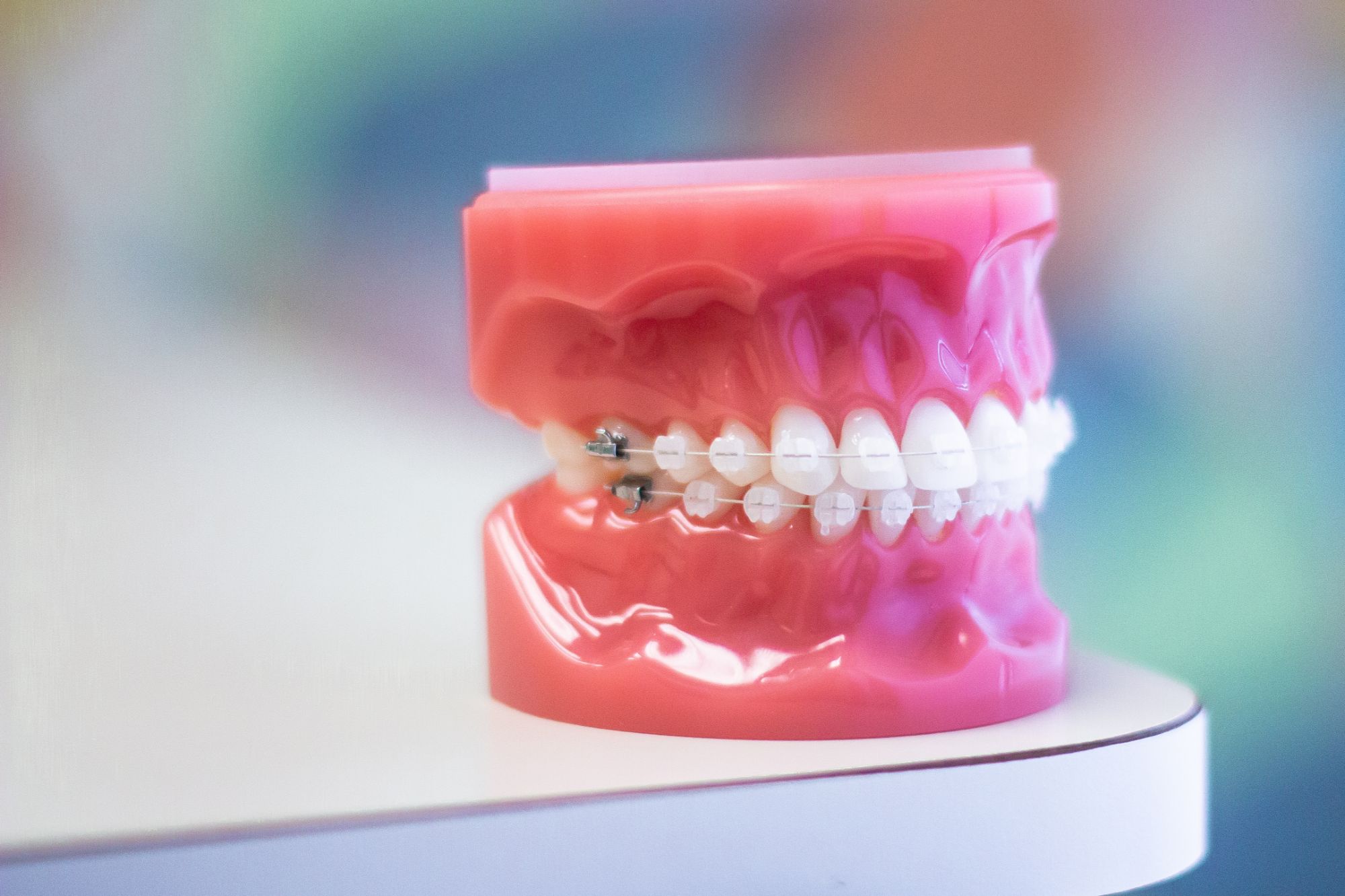
The precision of traditional braces with tooth-colored brackets — a discreet fixed option for patients who want effectiveness without the metal look.
What They Are
Fixed. Effective. Far less visible.
Clear braces — also called ceramic braces — use the same bracket-and-wire mechanics as traditional metal braces, but with brackets made from tooth-colored or clear ceramic material. From a distance, and in most social settings, they blend in significantly better than metal. Up close, they're still visible — but for many patients, that tradeoff is exactly right.
Like traditional braces, clear braces are fixed to the front of your teeth and work continuously — no trays to remove, no wear schedule to manage. They're an excellent middle ground for patients who want the reliability of fixed treatment with noticeably less visibility than metal.
At our Evanston practice, Dr. Kim considers the full picture — your bite, your facial profile, your airway, and your long-term stability — before recommending clear braces or any other treatment. The right option is the one that actually fits your case.
How They Compare
Clear braces vs. your other options
vs. Metal Braces
Same mechanics, more aesthetic appearance. Clear brackets blend with the tooth surface rather than standing out against it. Metal brackets are slightly more durable and less prone to staining — but for patients who care about how they look during treatment, clear brackets are a meaningful upgrade. Treatment capability is identical.
vs. Clear Aligners
Both are more discreet than metal braces, but in different ways. Clear aligners are nearly invisible and removable. Clear braces are fixed and visible up close, but require no compliance. For patients who want discretion without the discipline of aligner wear — or for cases where fixed treatment produces better results — clear braces are often the right call.
vs. Hidden Braces
Hidden braces (lingual braces) are placed on the inside of the teeth and are completely invisible. Clear braces are on the front — visible up close, but far less noticeable than metal. Hidden braces require more technical skill and typically cost more. Clear braces are a practical middle-ground for patients who want reduced visibility without the premium of lingual placement.
Who This Is For
The right patient for clear braces
Clear braces work well for a wide range of patients — and particularly for those who want fixed treatment with a more aesthetic presentation.
Adults who want fixed treatment
For adults who prefer the consistency of fixed braces but are concerned about metal hardware during treatment, clear brackets are a practical and effective solution.
Teens who are aesthetics-aware
Many teens prefer the look of clear brackets over metal. They offer the same compliance-free treatment as traditional braces with a noticeably softer appearance.
Patients with complex cases
Because clear braces use the same mechanics as metal braces, they're suitable for cases that require more precise or complex tooth movement — cases that might not be well-suited to clear aligners.
Patients who want reliability without compromise
If you want a treatment that's always working — no trays to remember, no wear time to track — but you'd rather not have metal brackets, clear braces give you both.
Clear braces aren't the right fit for every patient or every case. Some patients are better served by aligners, hidden braces, or metal brackets depending on their anatomy, goals, and lifestyle. Dr. Kim will tell you honestly which option she'd recommend for your specific situation — and why.
What to Expect
Your treatment, step by step
Consultation & records
Digital scans, photos, and any necessary imaging give Dr. Kim a complete picture of your bite, your face, and your goals before any recommendation is made.
Bracket placement
Clear ceramic brackets are bonded to the front surface of your teeth in a single appointment. The process is identical to metal bracket placement — including Dr. Kim's Smile Arc Protection positioning, which guides your front teeth to follow the curve of your lower lip. The appointment typically takes 1–2 hours.
Active treatment
You come in every 6–8 weeks for adjustments. Dr. Kim evaluates progress and makes changes to the wire or bracket positioning to continue moving teeth toward their final positions.
Debonding
When teeth have reached their final positions, brackets are removed and teeth are polished. Clear ceramic brackets debond cleanly — no residue, no lasting impact on enamel when properly removed.
Retention
A retainer is placed immediately after debonding. Retention planning is built into treatment from day one — because the result you worked for deserves to be protected long-term.
The Details
What you should know
Visibility
Clear brackets blend with tooth color significantly better than metal. Up close and in photos they're visible — but in most everyday settings, they're far less noticeable than metal braces.
Staining
The ceramic material itself doesn't stain — but the elastic ties that hold the wire can discolor from coffee, tea, and certain foods. Ties are replaced at every adjustment appointment, so staining resets regularly.
Durability
Ceramic brackets are slightly more brittle than metal and can chip under significant force. For contact sport athletes, we'll discuss whether a mouthguard or a different treatment option makes more sense.
Treatment length
Comparable to traditional metal braces — typically 18–24 months depending on case complexity. The mechanics are identical, so treatment timelines are the same.
Cost
Clear braces are typically priced slightly higher than metal braces due to the cost of ceramic brackets. We're transparent about all fees before treatment begins.
Oral hygiene
Brushing and flossing around brackets requires the same care as metal braces. Keeping the ceramic brackets clean also helps maintain their appearance throughout treatment.
Next Step
Find out if clear braces are the right fit for your case.
A consultation with Dr. Kim will give you a clear picture of your options and help you compare them honestly. No pressure, no obligation — just the information you need to decide.